
Braiding is an essential step in the manufacture of cables and wires. It is done through the intertwining of threads to produce a durable and flexible form which can offer protective or reinforcement properties. However, various products require various machinery setups. The selection of machinery is dependent on factors such as material type, product size, coverage, and speed.
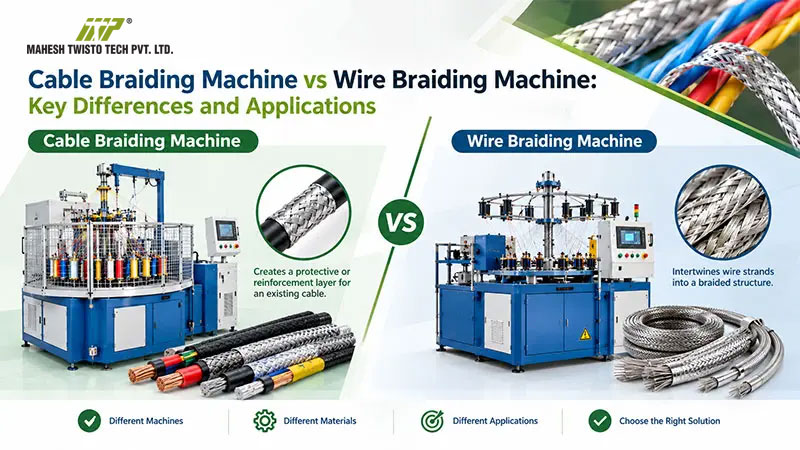
A cable braiding machine is generally used for braiding a cable with a core, whereas a wire braiding machine is used for intertwining wires with each other. Knowing the difference between the two machines makes it easier for manufacturers to choose the appropriate one according to their needs.
Cable Braiding Machine vs Wire Braiding Machine
Cable Braiding Machine
Cable braiding machines create a protection or reinforcement layer for an existing cable. The materials used can include copper, tinned copper, and aluminium, among others, depending on the machine and the intended application.
They are frequently used for the manufacturing of electrical cables, communication cables, automotive wiring, and industrial cable harnesses. The braided layer can offer electromagnetic or mechanical shielding.
While selecting a cable braiding machine manufacturer, the buyer needs to ensure that the machine is compatible with the desired specifications of the cable.
Wire Braiding Machine
The wire braiding machine intertwines the wire strands into a braided structure. Based on its construction, it is able to use fine metal wires or other suitable materials for specific products.
Applications could involve braided wire parts, flexible connections, and wire structures. The appropriate equipment is dependent on the diameter of the wire, wire configuration, wire material, and needs of the product.
A wire braiding machine manufacturer will assist you with clear information regarding the wire size that can be used, the carriers available, and the speed of the machine.
Key Differences Between the Two Machines
Although both machines use a braiding process, their intended products and operating requirements can differ.
| Feature | Cable Braiding Machine | Wire Braiding Machine |
|---|---|---|
| Main purpose | Braiding around a cable core | Interweaving wire strands |
| Materials | Copper, tinned copper, aluminium, or suitable fibres | Metal wires and other compatible materials |
| Applications | Shielded cables and reinforced cable assemblies | Braided wire components and specialised products |
| Setup | Depends on cable diameter and coverage | Depends on wire size and braid pattern |
| Quality focus | Shielding, coverage, and flexibility | Uniform interlacing and strand tension |
Some machines may handle multiple applications with suitable adjustments. Therefore, buyers should confirm the manufacturer’s specifications before selecting equipment.
Materials Used in Braiding
The material will depend on the use of the product and machinery.
- Copper wire: For conducting and cabling purposes.
- Tinned copper wire: Can be used where there is a need for coated copper wire.
- Aluminium wire: For applications where aluminium wire can be used.
- Synthetic fibres: For flexibility and reinforcement.
Compatibility of materials and correct tension can facilitate even braiding.
Understanding Braiding Speed
Machine speed determines the production rate, but higher machine speeds do not necessarily result in higher performance levels. This is because the production rate depends on the number of spindles, spindle speed, type of material, diameter of the product, and desired coverage of braid.
In some instances, such as in the production of wires, it may be necessary to have a certain speed of machine operations to avoid breaking them.
It is therefore important to determine whether the speed indicated relates to the speed of the spindle, carriers, or the speed of production of the finished product.
How to Choose the Right Braiding Machine
Before buying the machinery, consider the following:
- Product requirements: Determine if you require braiding on the cable core or the entire braided wire formation alone.
- Material suitability: Ensure that the diameter of the wire and its materials are covered.
- Number of carriers: Make sure that the number of carriers is appropriate for the braid pattern.
- Output: Ensure that the output matches your production needs without lowering quality.
- Versatility: Determine if the machine can accommodate various sizes of products with appropriate modifications.
- Specifications: A good wire braiding machine manufacturer will give you the necessary specifications and instructions.
Mahesh Twisto Tech Pvt. Ltd. can help you understand the available machine options based on your product and production needs. Before choosing a machine, discuss the materials you use, the required braiding speed, and the size of your product to find the right fit.
Conclusion
The cable braiding machine is designed to create protective or shielding braid covering for cables, while the wire braiding machine is employed in tasks that require weaving wires together.
Selection of the proper device should be made based on materials, size of the products, braid coverage, speed, and output. The comparison of these factors will help the manufacturers make the right selection.
Consulting a reputable cable braiding machine manufacturer or wire braiding machine manufacturer will guide you towards machines suitable for your production needs. Get in touch with our team to get started.
FAQs
It provides braiding layers to cables for purposes of shielding, reinforcing, or protecting them.
Popular materials used are copper, tinned copper, aluminium, and suitable synthetic fibres.
Material compatibility, product size, carrier count, and speed have to be considered.
