
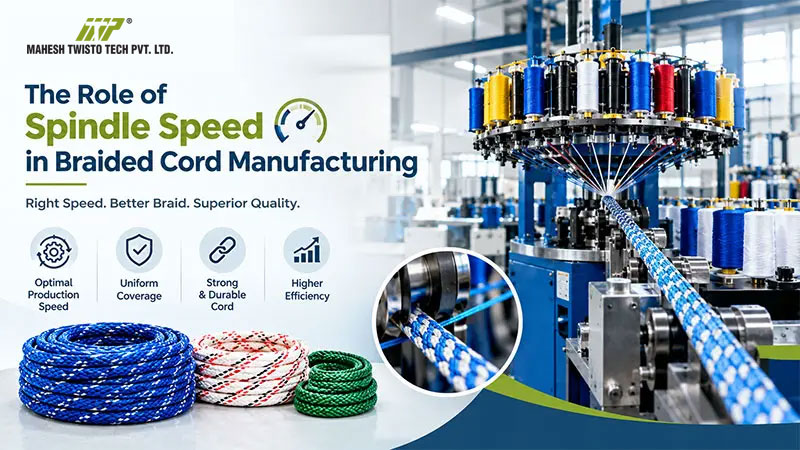
Spindle speed is another critical factor in relation to the quality and functionality of the braided cord. If the speed is too high for the fibre, there will be uneven coverings or breakages, and too slow can limit productivity. Balancing the process is crucial rather than spinning it as fast as possible. A well-adjusted braided cord making machine matches production speed to the required cord structure.
Understanding Spindle Speed in Cord Manufacturing
The spindle speed is defined as the speed at which a spinning component rotates while in use. In the braiding process, the yarn is fed on the carriers that follow a set path while winding along the cord being formed. The speeds of the moving components affect the process and its productivity.
There are different ways of measuring speed. Spindle speed, or horn gear or carrier speed, may be listed in some specifications. Be sure to review the manual and technical data to see which RPMs are being measured.
How Speed Affects Braiding
In braiding, the yarns are guided in a predetermined manner around each other. The rate of this movement is controlled by the drive. A proper environment maintains uniformity.
The faster the speed the greater output, but not necessarily better production. When yarn is not able to feed smoothly or the synchronization of the take-up is not correct, the faster runs can lead to yarn breaks, uneven coverage and non-acceptance of cord. Running slower can be helpful when loading, unloading, or handling materials, but it will decrease productivity.
Speed, Tension and Cord Quality
The speed should be taken into account along with yarn tension. Tension can be different on two different carriers, which can cause a tighter or looser sit, loose sections, and uneven thickness and surface of the finished cord.
Before increasing speed, check the yarn feeding, bobbin and take-up. A brief trial will determine if the braid forms evenly. If you begin to see a lot of yarn breaks or the cord seems to be inconsistent, stop the machine and examine the setup instead of repeatedly increasing or decreasing the speed.
Factors That Affect the Proper Operating Speed
Different factors come into play as to the best setting:
- Yarn material: Fibres have varying extensibility, tack and wear resistance.
- Thickness of the yarn: Thicker yarns could require different tension and feed settings.
- Cord diameter: The diameter of the cord may necessitate a different setup and production rate.
- Carrier count and braid pattern: These will impact the way yarns lace together and the amount of material that will be in the braid.
- Machine condition: Worn parts, lubrication or alignment problems can cause a lack of smooth running.
Adjust one setting at a time, make observations about the results, and keep the adjustments that help.
Balancing Production Speed with Cord Strength
Speed alone does not determine strength; fibre quality, yarn count, braid structure, tension and application matter too. A steady run will produce more usable output, and a run with speedy production will have more rejects.
Begin in the recommended range and test for uneven patterns, broken strands or yarn breaks. If any defects are seen, inspect yarn path, tension, machine condition and take-up. Document settings that give satisfactory results and carefully compare results prior to approving routine production settings.
Choosing Equipment for Your Needs
When comparing a braided cord making machine, don’t consider only the maximum speed. Look at the diameter of the cords supported, the number of carriers, the adjustment possibilities, the safety features, the maintenance, and the technical support. Inquire about yarns and quantity of product.
Model-specific braiding specifications can be found on Mahesh Twisto Tech’s braiding machine page. Communicate your cord size, material and production needs to the manufacturer, to ensure the recommended setup is the right one for your application. A good machine is one that can be relied upon for consistent results, not merely a high speed measurement.
Conclusion
Spindle and drive speed are factors in production, but the optimum speed results in a stable, good braid. Test changes carefully; balance speed with yarn tension, carrier movement and take-up. Before you choose a braided cord making machine, check the working range of the machine.
Mahesh Twisto Tech provides specifications for customers to consider when making their purchase decisions and when discussing a suitable configuration. Get in touch with our team to discuss your requirements.
FAQs
No. Output can potentially improve with higher speed, but only as long as the yarn feeding, tension and take-up are stable.
Check yarn flow, bobbins, tension, carrier movement and take-up. Make slight adjustments and examine the cord.
Carrier count determines how many strands are used to make the braid, and influences the appropriateness of a machine for the cord construction.
